
A tattoo can represent exactly who you were at one point in your life, but that does not mean it has to represent who you are forever. Maybe the design no longer fits, the ink has aged poorly, or you simply want space for something new.
Tattoo removal offers a non-surgical way to gradually fade unwanted ink by using concentrated laser energy to break pigment into smaller particles that the body can clear over time. The question patients usually ask next is simple: how long will it take? There is no honest universal number because tattoos differ dramatically in color, density, depth, age, and size.
Pur Aesthetics and Wellness uses advanced laser technology capable of targeting a range of ink colors and tattoo types. Keep reading to understand the laser tattoo removal process, what determines your number of sessions, and why patience is an important part of getting results.
What Really Determines Your Sessions?
Searching laser tattoo removal how many sessions may bring up neat numbers, but real tattoos rarely follow a neat formula. Your treatment plan depends on the ink itself, the laser technology being used, your desired endpoint, and how your body responds between appointments.
1. There Is No Magic Session Number
One of the first things to understand is that laser tattoo removal is a process rather than a one-appointment eraser. Some tattoos respond relatively quickly, while others require a longer series of treatments to achieve significant fading.
That difference does not necessarily mean one treatment is working and another is failing. Tattoos are made with different pigments, placed at different depths, and applied with different amounts of ink. Your body also plays an important role because the laser breaks pigment apart, but natural processes are responsible for gradually clearing those fragmented particles afterward.
This is why an exact session count should not be promised before treatment begins. An initial assessment can provide a more personalized estimate based on the tattoo’s characteristics, but the way it responds to the first few treatments provides valuable information too.
The better question is not simply, “How many appointments do I need?” It is, “What factors will determine how my particular tattoo responds?” Once you understand those variables, the timeline makes much more sense.
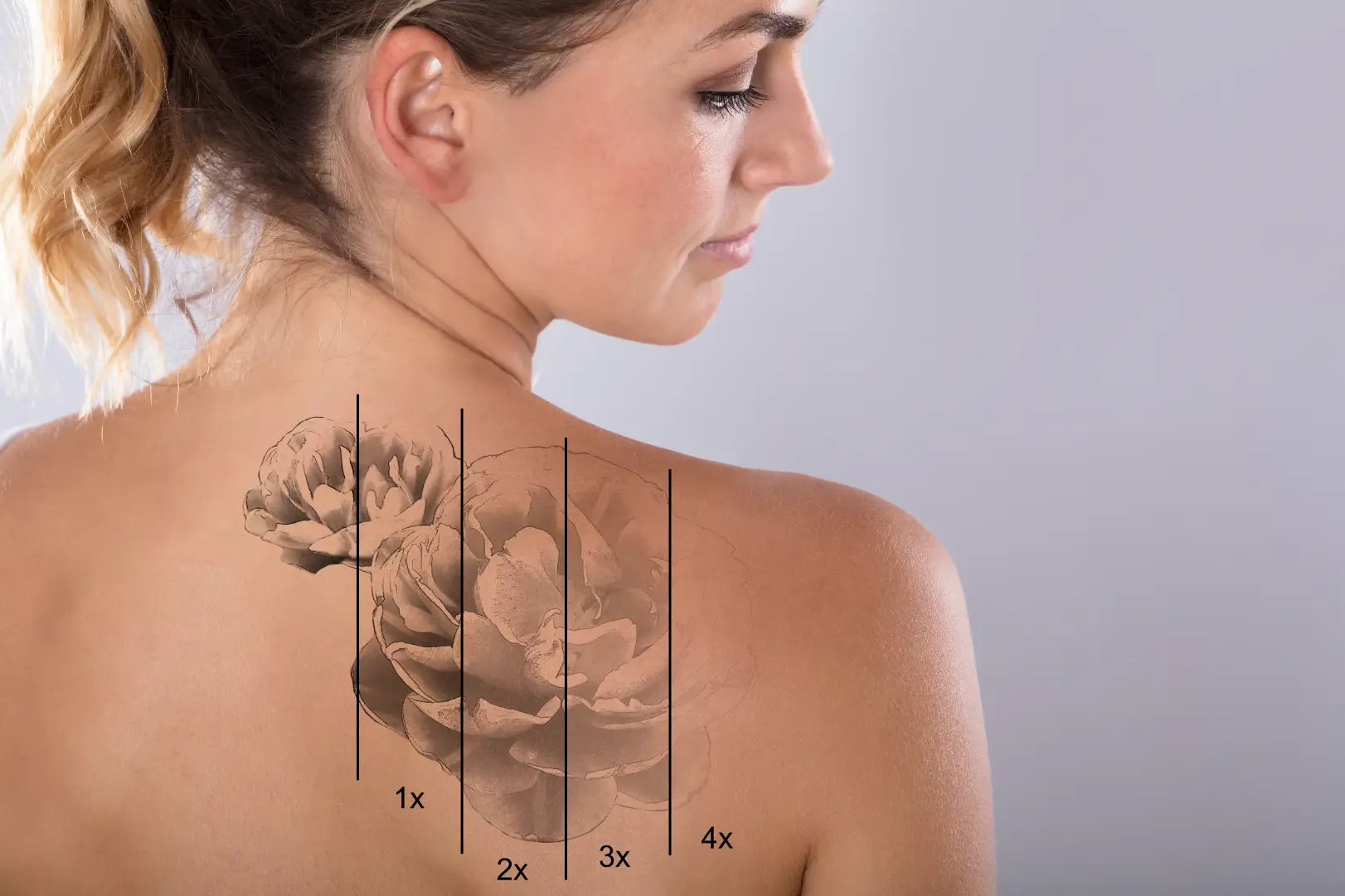
2. Laser Energy Breaks Ink Into Smaller Particles
To understand how tattoo removal works, it helps to know what the laser is actually doing beneath the skin. Tattoo pigment is placed into the dermis, which is why washing, exfoliating, and ordinary skin turnover cannot simply remove it.
During laser treatment, concentrated light energy is directed toward the tattoo pigment. The ink absorbs that energy and breaks into much smaller particles. Your body’s natural clearance processes can then gradually remove some of those fragmented particles over time.
That last part is important. The laser does not physically vacuum ink out of the skin during your appointment. Much of the visible fading happens afterward as the body processes the fragmented pigment.
This is also why treating the same tattoo repeatedly within a very short period would not necessarily produce faster results. The skin needs time to recover, and the body needs time to work on the pigment that has already been disrupted.
Tattoo removal is therefore a partnership between laser technology and your body’s biological response. Each session creates another opportunity to fragment remaining pigment, while the time between appointments allows the process to continue.
3. Different Ink Colors Behave Differently
A tattoo may look like one design, but a multicolored piece is essentially a collection of different pigment targets. Different colors absorb different wavelengths of light, so removing them may require more than one laser wavelength.
Pur Aesthetics and Wellness uses Spectrum Q-Switched Nd:YAG/KTP technology with 1064 nm and 532 nm wavelengths. The 1064 nm wavelength is used for darker pigments, including colors such as black, blue, and green, while 532 nm can target brighter colors such as red, orange, and some yellow pigments.
The practice also uses PicoLazer technology with picosecond 1064/532 nm wavelengths. Its ultrafast pulses are designed to fragment pigment into very small particles, providing another approach to visible tattoo fading.
The technology can be used across professional and amateur tattoos, multicolored designs, and cosmetic tattoos such as eyebrow microblading. However, having technology capable of treating multiple colors does not mean every pigment will respond identically.
Some colors may fade faster than others within the same tattoo. That can create a period during the treatment series when certain parts look dramatically lighter while other shades remain more visible.
4. Black Ink Often Gives the Laser a Strong Target
Dark tattoo ink is commonly considered responsive to laser treatment because certain wavelengths can target darker pigment effectively. At Pur Aesthetics and Wellness, the 1064 nm wavelength is used for deeper, darker pigments such as black, blue, and green.
That does not mean every black tattoo will disappear on the same schedule. Ink density, depth, tattoo technique, layering, and the patient’s response still influence progress.
A small black tattoo created with relatively little pigment may behave differently from a large professional piece containing dense, saturated black ink. Even though both appear black to the eye, the amount and placement of pigment beneath the skin can be very different.
This is another reason online before-and-after photographs cannot predict your exact timeline. Two tattoos can appear similar in photographs while behaving very differently once laser treatment begins.
Your provider can evaluate the tattoo before starting, but progress across the series remains the best guide for determining how much treatment is still needed.
5. Professional Tattoos May Contain More Ink
How the tattoo was originally created can influence removal. Professional tattoo artists typically use techniques designed to place pigment consistently and produce saturated, long-lasting designs.
That is excellent when you want a tattoo to stay. It can make removal more involved when you later change your mind.
Professional tattoos may contain greater pigment density and more uniform placement than some amateur tattoos. More pigment can mean that additional laser sessions are needed to progressively fragment what remains.
Amateur tattoos can sometimes contain less ink or less consistent placement, although that does not automatically make every amateur tattoo easy to remove. Depth and pigment composition can still vary considerably.
Pur Aesthetics and Wellness treats both professional and amateur tattoos. The important point is that the label alone does not dictate your session count. Your tattoo needs to be evaluated as it actually exists today. Its appearance, color, saturation, location, and previous treatment history all contribute to the plan.
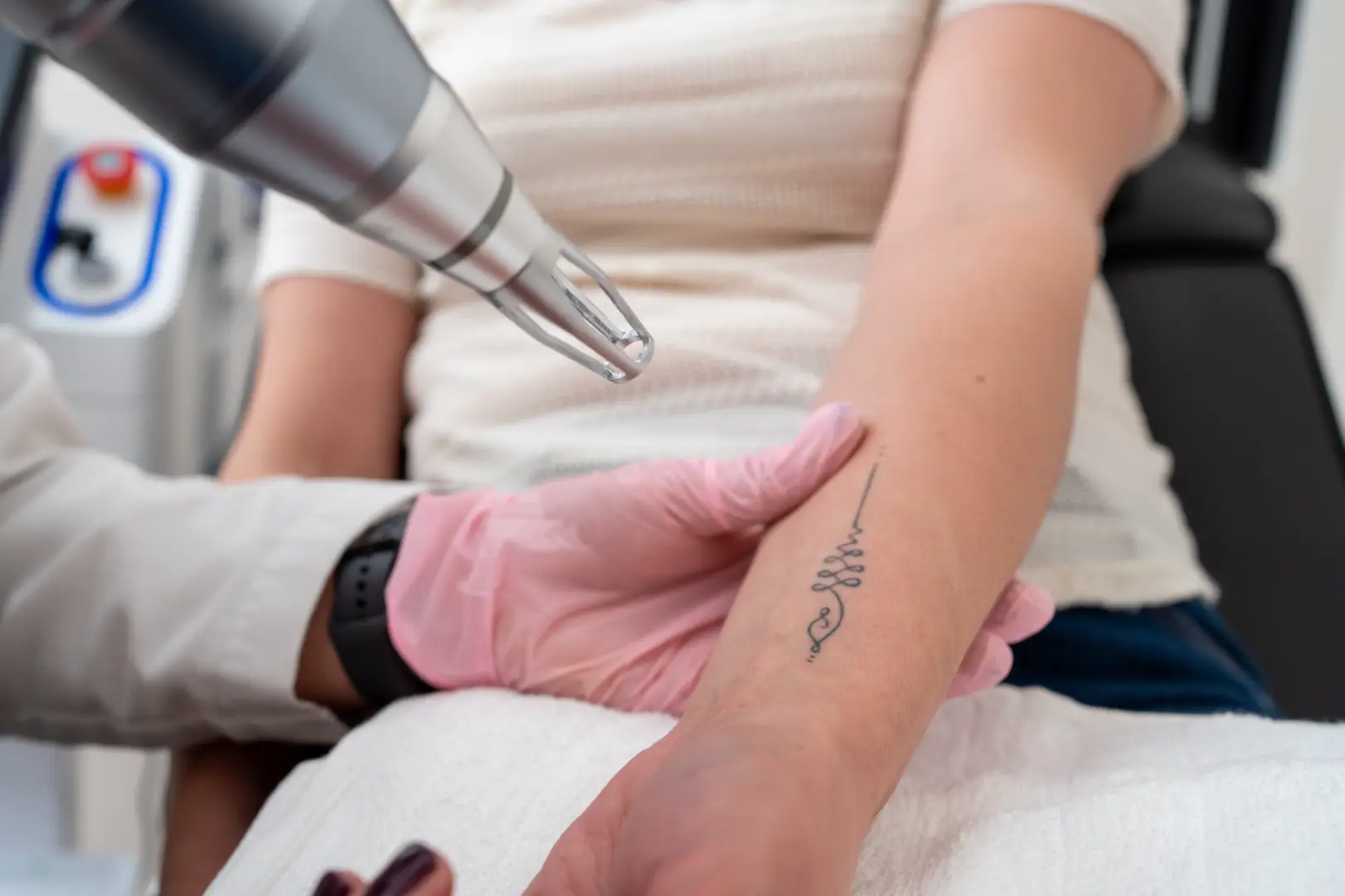
6. Tattoo Size Is Only Part of the Equation
It seems logical that a tiny tattoo should always require fewer sessions than a large one. Size certainly affects how much area must be treated, but it does not tell the whole story about how many appointments will be needed.
A small tattoo can still contain dense, stubborn pigment. A larger tattoo may include lighter shading and areas that respond relatively quickly.
Size can have a bigger influence on appointment logistics and tattoo removal cost because more treatment area generally means more work. Cost may also depend on the technology used, number of sessions, complexity of the tattoo, and the practice’s pricing structure.
This is why comparing the cost of removing your tattoo with someone else’s can be misleading. A small multicolored tattoo and a larger black-and-gray piece present very different treatment considerations.
An assessment gives you a more useful picture of both anticipated treatment and financial commitment. It also allows you to decide whether complete removal or strategic fading better matches your goal.
7. Your Goal May Not Be Complete Removal
Not everyone walking into a tattoo removal appointment wants completely bare skin. Some patients simply want an old design lightened enough for a tattoo artist to create something new over it.
Fading tattoo before a cover-up can therefore change the treatment plan significantly. A dark, saturated tattoo can restrict what a tattoo artist is able to place over it. Reducing the visibility of the old pigment may provide greater flexibility when designing the cover-up.
Because the goal is fading rather than maximum possible clearance, fewer treatments may sometimes be needed. The stopping point becomes a collaborative decision based on how much the tattoo has lightened and what the tattoo artist needs for the new design.
Tell your laser provider about this goal from the beginning. There is little value in pursuing more fading than necessary if your actual plan is to cover the area with new artwork.
Complete removal and cover-up preparation are two different destinations. Your treatment schedule should reflect which one you are trying to reach.
Give Your Ink a New Ending
Changing your mind about a tattoo does not mean you have to keep seeing it exactly as it is today. Tattoo removal can progressively break down unwanted pigment, whether your goal is significant clearance or simply creating a lighter canvas for new artwork.
At Pur Aesthetics and Wellness in Granger, IN, advanced Q-switched and picosecond laser technologies provide options for treating a range of professional, amateur, multicolored, and cosmetic tattoos. Your tattoo has its own history, so its removal deserves an individualized plan rather than a promised session count.
Call us today to schedule your appointment!